Voidscape — Turning Personal Media into Citable Evidence
Voidscape reads video, audio, images, articles, feeds, and chat exports through one visible sequence: inspect, preview, read.
Public CLI · evolving
Turn media into ordered evidence with an inspect → preview → read workflow. Portable packs are experimental; broader release validation is still in progress.
Explore the CLI ↗Status documented

Overview
Voidscape is an open-source, local-first evidence engine and agent skill. It turns recordings, public video URLs, voice notes, images, filename-ordered carousels, articles, RSS/Atom feeds, and exported chats into inspectable evidence bundles: selected visuals, timestamped or ordered text, and a manifest an agent can cite. The product contract is deliberately visible — inspect the source, preview cost and permission gates, then read only the approved artifacts. No account, upload, or API key is required by default.
The Problem
Agents often answer from filenames, thumbnails, snippets, or page summaries instead of the media itself. That creates confident claims without evidence, while naive processing can also upload private audio, trigger a model download, or incur cloud cost without a clear decision point. Voidscape makes evidence, consent, and recoverability part of the interface rather than hidden implementation details.
Questions Addressed
- 01
How can one evidence contract work across video, audio, images, articles, feeds, and exported chats?
- 02
How do cost, cloud transfer, and first-model-download approval stay visible to both people and agent callers?
- 03
Can interrupted or truncated agent sessions recover the same manifest without processing the source again?
- 04
What release evidence is strong enough to separate a tested capability from a broad “shipped” claim?
Methodology
Inspect → Preview → Read
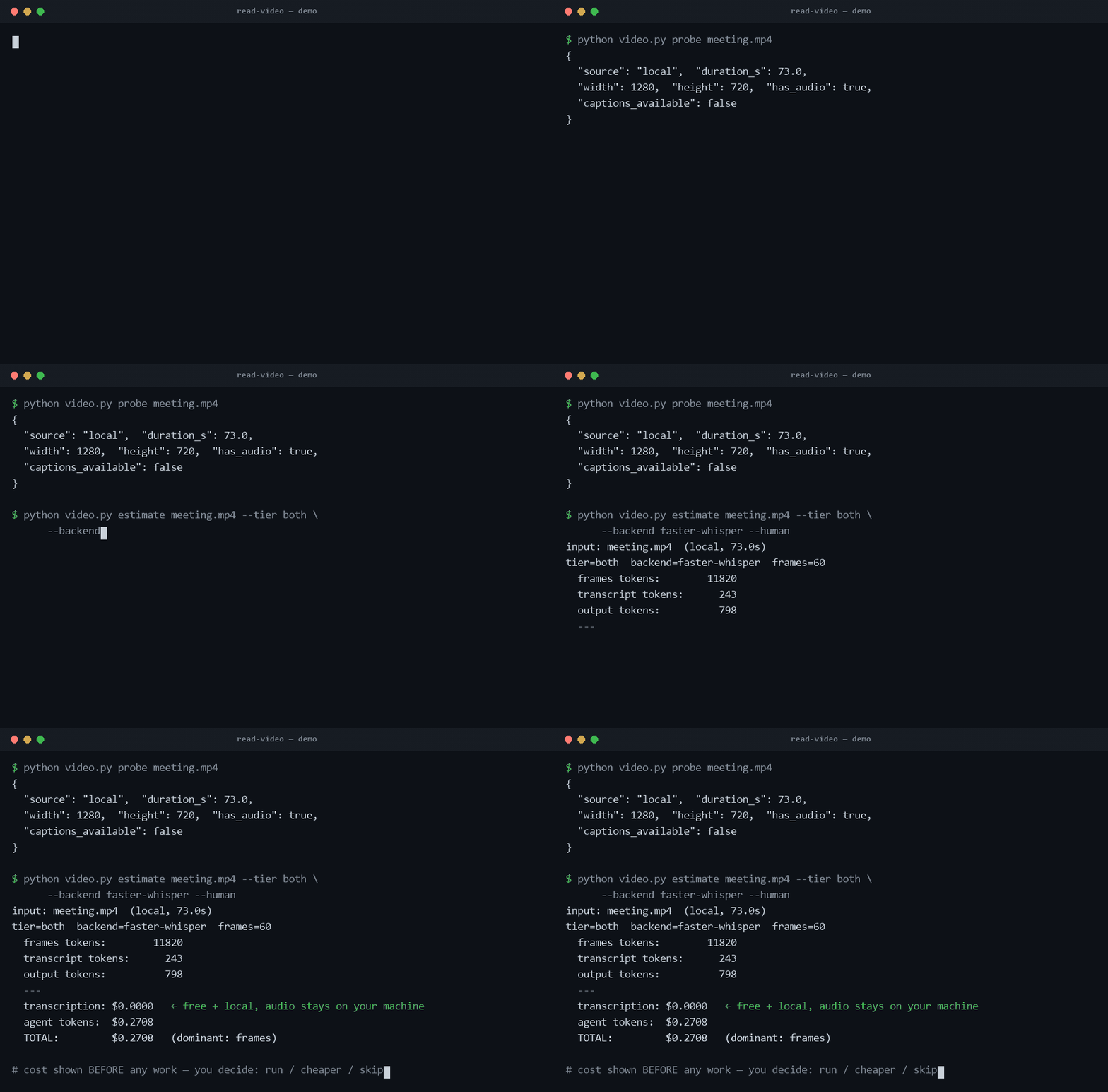
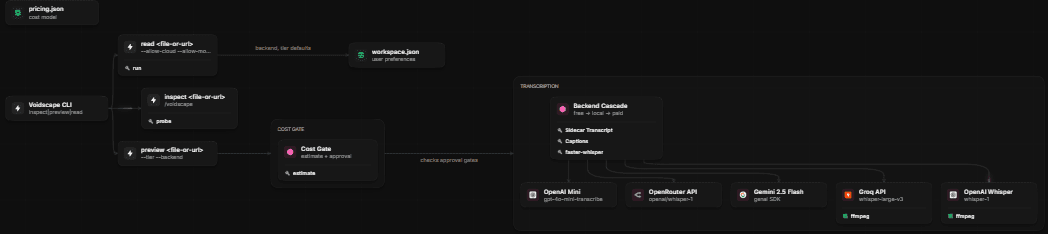
inspect reports source facts without processing; preview exposes the selected reader, dependency state, token or transcription cost, and any approval gate; read produces only the approved evidence. Matching local sidecars win automatically, while cloud transcription and a first local-model download each remain separate, current decisions.
Evidence Bundles Across Media Types
Video reads return selected frames, a timestamped transcript, and a manifest. Image and carousel reads preserve source bytes and natural order. Article, RSS/Atom, and chat-export readers produce ordered text evidence with provenance, while partial artifacts stay explicitly marked when later processing fails.
Agent-Native Recovery and Errors
Machine callers receive `{ok,data,error,meta}` envelopes, deterministic exit codes 0–6, retryability metadata, and a private latest-read pointer for recovering manifests after terminal truncation. The bundled skill teaches agents to cite `[MM:SS]`, `[image N]`, `[article N]`, or `[message N]` rather than improvise.
Release Evidence and Hardening
The current merged checkpoint passed 1,314 Windows tests, with the same release tree exercised by hosted checks. Security findings, incomplete viewport verification, and unsupported account-collection flows remain called out instead of being folded into a blanket release claim.
Key Results
Key Findings
Cost transparency is a UX feature for agents: showing the price before the work turns "the AI ran up my bill" into an informed yes/no.
A local sidecar wins automatically; cloud transfer and first-model downloads stay explicit approvals rather than being inferred from configuration.
Evals beat vibes for skill design: a measured 93.3%-vs-66.7% gap is what separates "the skill helps" from hoping it does.
Durable manifests and recovery pointers matter because an agent session can truncate even when the media-processing job succeeded.
Conclusion
Voidscape has grown from a video utility into a general evidence layer for agent workflows. The public site and install path are live at voidscape.club, while the repository keeps release status narrow: merged and tested capabilities are documented separately from remaining source, viewport, provider, and integration gates.